
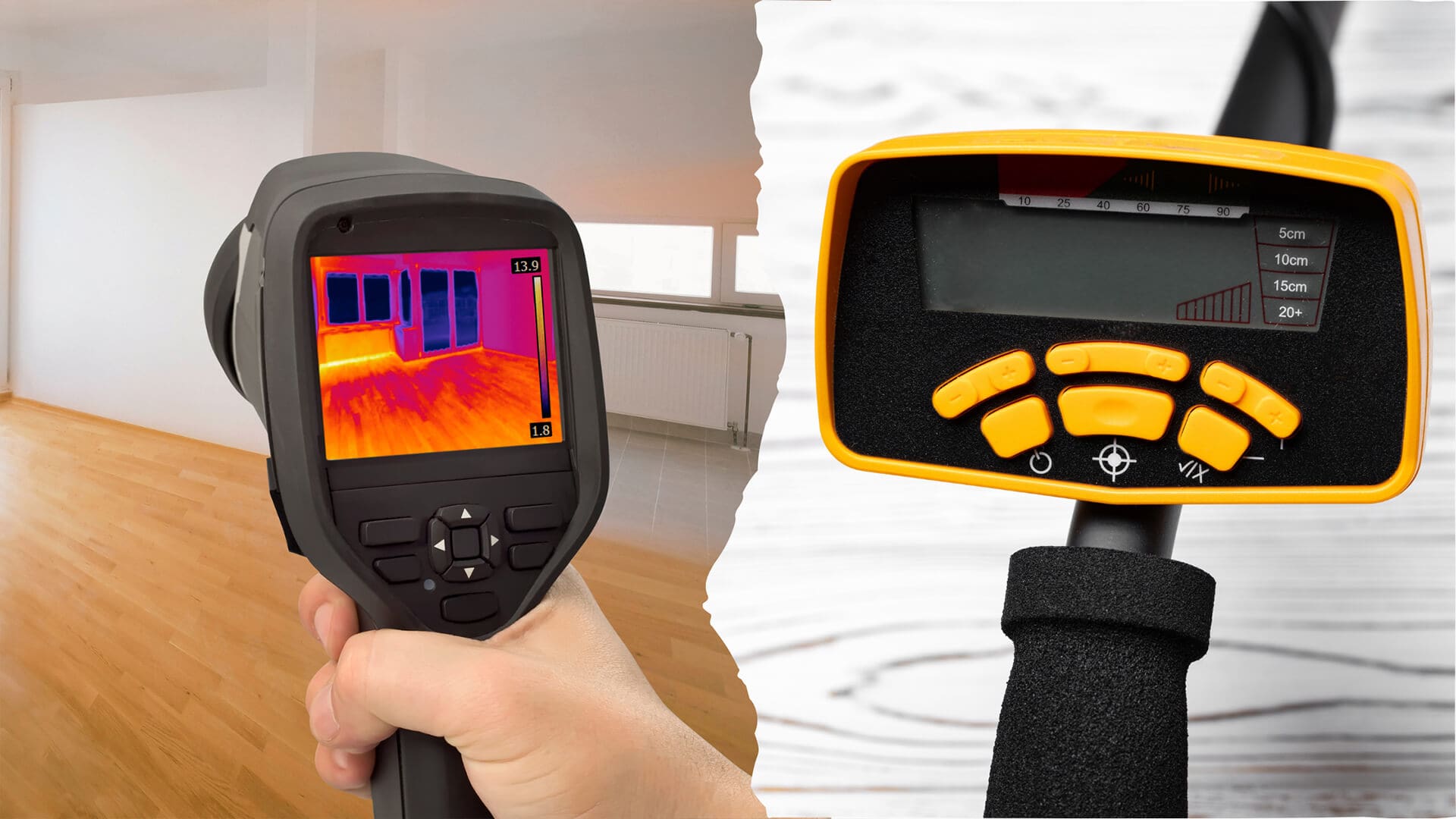
Hidden leaks often go unnoticed while causing damage and rising water bills. Modern leak detection technology replaces guesswork with precise, non-invasive methods that locate issues without cutting into walls or floors. Thermal imaging leak detection and acoustic leak detection are two of the most effective tools used to find what cannot be seen.
How Thermal Imaging Finds Hidden Moisture
Thermal imaging leak detection works by reading temperature differences across surfaces and showing where moisture is changing the way building materials heat and cool. Infrared cameras pick up those subtle shifts as visible patterns, which gives plumbers a clearer view of what may be happening behind walls, beneath floors, or across ceilings without opening anything up first.
Warm water leaks often appear as localised hot spots, while cold water leaks can show as cooler patches. That makes thermal imaging especially useful when the leak is affecting surrounding materials rather than producing an obvious drip or puddle.
Common examples include:
- Underfloor heating leaks creating uneven heat patterns beneath tiles
- Wall leaks showing as cool patches before visible damp appears
- Ceiling leaks where moisture spreads through plasterboard
Thermal imaging is often the better option when the issue is likely to leave a heat signature across a surface and the goal is to quickly narrow down the affected area.
How Acoustic Detection Tracks Active Leaks
Acoustic leak detection focuses on sound rather than temperature. When pressurised water escapes a pipe, it creates vibrations that travel through concrete, soil, flooring, and wall structures. Specialised microphones and listening devices pick up those sounds, allowing plumbers to follow the signal back to the source with far more precision than guesswork ever could.
Smaller leaks often produce higher frequency sounds, while larger leaks tend to create lower frequency vibrations. A trained operator can use those sound patterns to work out not only where the leak is, but also whether the leak is likely to be minor or more developed.
Acoustic detection is especially effective when the leak is active and pressurised, and when surface clues are limited or completely absent. Common examples include:
- Slab leak detection where pipes run beneath concrete
- Underground supply lines beneath driveways or lawns
- Wall cavities where water movement can be heard but not seen
Acoustic leak detection is often the stronger option when the problem sits deeper in the structure or below ground and the leak needs to be pinpointed as accurately as possible before repairs begin.
Choosing The Right Method
Both methods are effective, but they are suited to different situations. Thermal imaging gives a fast visual scan of surfaces and helps identify areas affected by temperature change, which makes it useful for wall leaks, ceiling leaks, and heated pipework. Acoustic leak detection is better suited to active leaks in pressurised pipes, especially when the pipe is under a slab, underground, or hidden within dense building materials.
A slab leak is a good example of where acoustic equipment can be especially useful, because the sound of escaping water can travel through concrete even when nothing is visible above the surface. A leak behind a bathroom wall may be easier to assess with thermal imaging if moisture is already changing the surface temperature. Underground pipework often points back to acoustic methods, while hot water pipe issues inside the home can often be picked up more clearly through thermal imaging.
Choosing the right method comes down to the type of leak, the pipe location, and what signs are already showing within the property.
Finding The Right Leak Detection Method
Leaks rarely stay contained, and even a small issue can escalate into structural damage or ongoing water loss if left unchecked. Using the right detection method makes the difference between a targeted repair and a larger, more disruptive fix.
Melbourne Plumbing Specialists uses advanced thermal imaging leak detection and acoustic leak detection to locate hidden leaks with precision, including slab leak detection and hard to trace pipework, helping reduce unnecessary damage while speeding up repairs.
Book a professional leak detection service and get the right method applied before a small leak becomes a major problem.
